Shangrila Industries

December 2025

Beyond Brushing

Welcome to Sunday Wellness, brought to you by Shangrila Pharma! When we think about oral health, most of us reduce it to brushing twice a day and visiting the dentist once a year. But oral health is not just about clean teeth; it’s a powerful indicator of your overall well-being. Here are five surprising insights about your mouth that may change the way you think about your daily dental routine.Let’s explore the lesser-known, fascinating side of oral health, the part that’s rarely talked about but incredibly vital. 1. Your Mouth Has a Microbiome Over 700 microbes live in your mouth, some protect, others cause harm. A healthy balance supports your immunity, digestion, and even protects against respiratory infections. 2. Gum Health = Heart Health Gum disease can potentially affect heart health. Inflammation allows bacteria to enter your bloodstream and affect your arteries. Brushing and flossing daily helps protect more than just your smile. 3. Your Teeth Can Reveal Nutritional Deficiencies Bleeding gums or frequent mouth ulcers? You might be low on Vitamin C, D, or B12. Your oral health often reflects what’s missing in your diet. 4. Stress Shows Up in Your Mouth Teeth grinding, jaw pain, and ulcers are oral signs of stress. Managing your stress levels is as important for your mouth as it is for your mind. 5. Night Brushing Is Non-Negotiable Saliva flow slows down at night, making your mouth a hotspot for bacteria. Brushing before bed is your best defense against decay and bad breath. Wellness Challenge of the Week Try the 2×2 rule:Brush 2 times a day, for 2 minutes each time, every day this week.Set a timer. Your gums will thank you. “Good oral health plays a hidden role in your overall well-being.” Wishing you a week full of smiles and wellness! ~ Shangrila Pharma

Beyond Brushing Read More »

From Mat to Mind

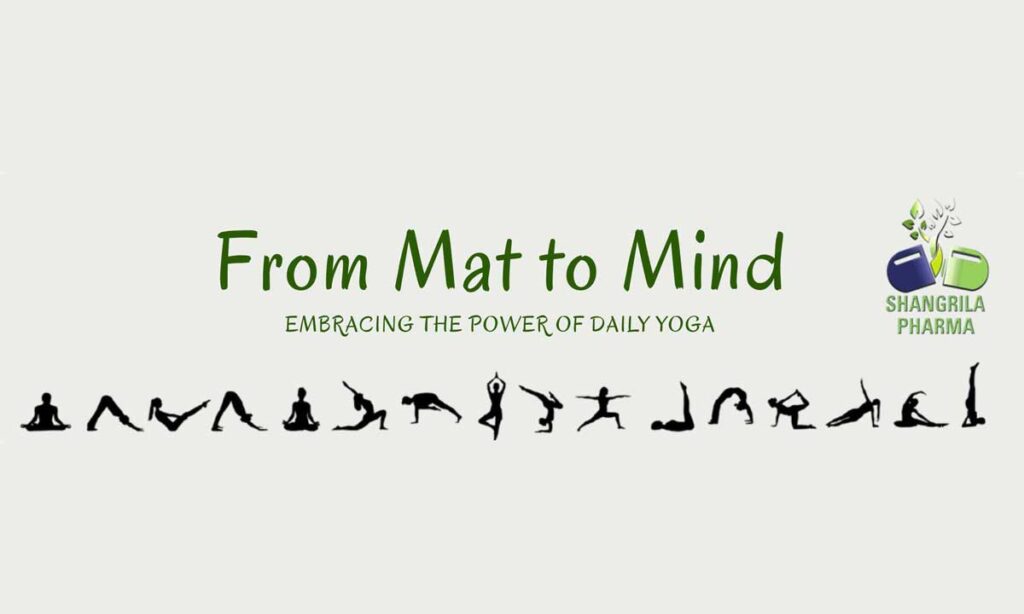
On June 21st, the International Day of Yoga, let’s recognize yoga not just as a form of exercise, but as a daily ritual for holistic health. Practicing yoga for even 15–20 minutes a day can significantly improve flexibility, boost digestion, reduce stress, and enhance mental clarity. With simple asanas you can build strength, calm the mind, and maintain overall wellness, right from the comfort of your home. Yoga is more than movement; it’s a pathway to balance, healing, and sustainable living. Introducing you to five essential yoga asanas, perfect for beginners, that you can easily practice at home. Let’s embark on this journey to a healthier and happier you! 1. Tadasana (Mountain Pose) Benefit: Improves posture, strengthens thighs, ankles, and coreHow to Do:1. Stand tall with your feet hip-width apart, grounding through all four corners of your feet.2. Engage your core and lengthen your spine, drawing the crown of your head towards the ceiling.3. Let your arms hang naturally by your sides, palms facing forward.4. Relax your shoulders and breathe deeply. Hold for 30-60 seconds. 2. Bhujangasana (Cobra Pose) Benefit: Strengthens spine, opens lungs, stimulates digestionHow to Do:1. Lie on your stomach with your hands placed under your shoulders, fingers pointing forward.2. Engage your glutes and press the tops of your feet into the floor.3. Inhale and gently lift your chest off the ground, keeping your elbows slightly bent.4. Avoid straining your lower back. Hold for 15-30 seconds, then slowly lower back down. 3. Vrikshasana (Tree Pose) Benefit: Strengthens spine, opens lungs, stimulates digestionHow to Do:1. Stand tall and ground through your left foot.2. Place the sole of your right foot on your inner left thigh, avoiding the knee.3. Bring your hands to prayer position at your chest or raise them overhead.4. Find a focal point to maintain balance. Hold for 30-60 seconds, then repeat on the other side. 4. Pawanmuktasana (Wind-Relieving Pose) Benefit: Relieves gas, bloating, and improves digestionHow to Do:1. Lie on your back with your knees bent and feet flat on the floor.2. Inhale and bring your knees towards your chest.3. Exhale and clasp your hands around your knees, gently pulling them closer to your chest.4. Relax your shoulders and neck. Hold for 30-60 seconds, gently rocking from side to side if desired. 5. Shavasana (Corpse Pose) Benefit: Deep relaxation, stress relief, and mental clarityHow to Do:1. Lie on your back with your legs extended and arms by your sides, palms facing up.2. Close your eyes and relax your entire body, releasing anytension.3. Focus on your breath and allow your mind to quiet.4. Stay in this pose for at least 5-10 minutes. “Breathe deeply, move mindfully, live fully, that is the essence of yoga.” Let’s choose habits that heal both physically and mentally ~ Shangrila Pharma

From Mat to Mind Read More »

Nurturing The Planet, Nourishing Ourselves

World Environment Day is a time to reflect on our relationship with the Earth and recognize the profound connection between environmental well-being andpersonal health. At Shangrila Pharma, we believe that a healthy planet is essential for a healthy life. This year, we are focusing on simple yet impactful ways wecan all contribute to a more sustainable future while simultaneously improving our own well-being.Here are some practical habits you can incorporate into your daily life to benefit both your well-being and the environment: Walking & Cycling: Good for You, Good for the Earth Walking or cycling instead of using a car helps cut down on air pollution and carbon emissions. At the same time, it enhances heart health, builds stamina, andimproves mental clarity. Plant-Based Power: Fueling Health, Reducing Impact Adding more vegetables, fruits, and plant-based dishes to your diet is good for the planet and your body. It supports digestion, reduces the risk of chronicdiseases, and has a smaller environmental footprint. Reduce, Reuse, Recycle: Ditching the Plastic Habit Using reusable bottles, containers, and bags helps reduce plastic waste. Avoiding food wrapped in plastic also limits exposure to potentially harmful chemicals. Grow Green: Nurturing Nature at Home Keeping indoor plants or starting a small home garden can purify the air and reduce stress. Gardening also encourages mindfulness and emotional balance. Mindful Consumption: Making Conscious Choices Being intentional about consumption reduces unnecessary waste. It also encourages a simpler lifestyle, which supports mental well-being and reduces clutterrelated stress. “Healthy Life = Healthy Environment” Let’s choose habits that heal both our bodies and the planet. — Shangrila Pharma

Nurturing The Planet, Nourishing Ourselves Read More »

World Blood Donor Day 2025

In a world full of uncertainties, small acts shine the brightest, and one such SIMPLE, SELFLESS, and SILENTLY LIFE-SAVING is BLOOD DONATION. At Shangrila Pharma We believe healthcare is not only about medicine, it’s about community, compassion,and action. That’s why we support blood donation drives, create awareness on anemia, and Wencourage everyone, especially working professionals—to become regular donors. WHO Theme 2025: “Give blood, give hope: together we save lives.” This year, the World Health Organization (WHO) calls on people worldwide to donate blood and plasma regularly and voluntarily. The theme emphasizes that every donation helps build a healthier, and more resilient society. Have you ever been stuck in traffic, only to see an ambulance trying to pass through?Have you heard about a friend’s relative needing surgery, but the operation was delayed because blood wasn’t available?These aren’t rare cases—they are everyday realities in India. A Simple Act With A Huge impact It takes just 15–20 minutes to donate blood.You don’t need money. You don’t need fame. You just need a willing heart and a healthy body.One donation can save up to 3 lives.How? Your blood is separated into red cells, plasma, and platelets, each helping different patients.Your red cells help a patient in surgery.Your plasma supports a burn victim.Your platelets save a dengue patient. The Everyday Need for Blood Every 2 seconds, someone needs blood.More than 1.3 lakh people die every year in road accidents many due to uncontrolled bleeding.Thalassemia patients require monthly transfusions to survive.Women facing complications during childbirth often need urgent blood support.And in all these situations, it’s not a doctor or machine that saves lives first it’s YOU, THE BLOODDONOR. Who Can Donate? Most healthy individuals aged 18 to 65 years and weighing over 50 kg are eligible.Don’t worry you are checked for anemia, blood pressure, and general health before everydonation.It’s completely safe, and your body naturally replenishes the donated blood in a few days Your Turn to Be the Lifesaver You never know whose life your blood might save—a stranger on the road, a young mother, or even someone you know.Be the reason someone opens their eyes again.This World Blood Donation Day, take one step.Donate blood. Give hope. Save lives. “A few minutes of your time can mean a lifetime for someone else.” ~ Shangrila Pharma

World Blood Donor Day 2025 Read More »

Reasons For Acidity

How healthy you are? The answer to this basic question is found in your way of living i.e., your lifestyle. But how? Let’s Explain. We can stay healthy & wise if we lead a healthy lifestyle but if we lead an inactive lifestyle then undoubtedly, we are at a higher risk of health disorders. And poor lifestyle can cause not only diabetes and hypertension but also the common condition of Acidity. What we eat, when we eat, how we eat, what we drink, when we sleep, and when we exercise can all have a significant impact on our health. In this article, we will focus on some common everyday factors that increase the risk of acidity. EVERYDAY FACTORS THAT INCREASE THE RISK OF ACIDITY Skipping breakfast because you’re running late Skipping breakfast cause getting late for office/college? This a very common scenario that we came across in households every morning. But this can lead to long-term complications in our health. Skipping breakfast can cause a lack of energy, which can affect our mood, and concentration and lowers our blood glucose level. To fill this replication, we eat comfort food which will fill the stomach but also increases the risk of acidity and gas. Note: The solution to this is not to have a heavy lunch but to have a heavy breakfast. Make it a habit to have breakfast and not leave a home empty stomach because a Healthy & Happy stomach means a Healthy you. 2. Drinking tea/coffee because it keeps you running Getting bored at work? Take a sip of tea/coffee. Feeling sleepy and tired? Get a cup of tea/coffee. If you are also the one who believes that tea/coffee can run your body then it’s time to change your habit and attitude. The reason is drinking tea/ coffee can help you to run for some time but it can lead to a reason of acidity. Note: If you can’t leave tea/coffee then try to limit the cup of tea/coffee to not more than 3 cups a day. It will help you to lower the risk of acidity. 3. Spicy and oily food because it is tasty Spicy food is tasty and flavorful, so we load up our food with spices to make it tasty. But it is a misconception, so we should think a little that how this spicy food can affect our stomach and health. Every time we attend a party or function, we can’t avoid oily and spicy food, and ends with a late-night stomach ache. Also, eating fried food or overeating spicy & oily food can cause obesity, affect the health of the gut, and increases the risk of acidity. Note: If you suffer from acidity at an odd time such as at the midnight or in the middle of a meeting limit the intake of oily and spicy food. Try to eat more healthy food than spicy to keep your health and stomach healthy. 4. Exercising at the wrong time Exercise is an effective and simple way to stay healthy, but exercising just after a meal can take you at risk of acidity. The reason is exercising after meals can cause the flow back of acid into the esophagus resulting in acid reflux, but it doesn’t mean to lay on a bed after an intake of a heavy meal. There should be a gap of minimum 2 hours between the meal and sleep. Note: Exercise on a regular basis but avoid exercising after meals because it can be harmful to the health more than the good. You can walk a little after a meal it will be helpful in digestion, but avoid running and exercising. 5. Sleep of 3-4 hours is sufficient to survive Completing a project by staying awake at night or watching the web series till late hours is not a good decision. The reason is simple, your mind will be tired and exhausted because it worked all night and didn’t get enough rest as needed. So, to rise up your energy level you will take tea/coffee as fuel to your body which can cause acidity. And making it a habit can increases the risk of acidity and affect your health with various health disorders. Note: Make sure you maintain a sleep schedule of at least 7-8 hours of sleep for maintaining a healthy lifestyle. Acidity is a common disorder that we all have experienced. But keeping healthy lifestyle factors i.e., diet, sleep, exercise, etc. can help to lower the risk of acidity and other health problems associated with it.

Reasons For Acidity Read More »

Build Better Bones Protect Your Future

As people get older, they lose bone cells, but some lose bone cells more rapidly than others. It leads to the weakening of the bones and makes them prone to damage. In most cases, patients do not realize they have osteoporosis until they suffer from a fracture. Anyone can get osteoporosis at any age, but women reaching menopause are more susceptible to developing osteoporosis. The bones of the spine, hip, and wrist are more vulnerable to bone breakage, but other bones can also be damaged. Patients with osteoporosis can cause a broken rib even by a simple sneeze or a violent cough. Bone is the support structure of the body. It is a hard, dense connective tissue that forms most of the adult skeleton. Strong bones are important for overall health. The best way to check bone health is the Bone Mineral Density (BMD) test. Low bone mass can further lead to Osteoporosis. Osteoporosis is a disease that thins and weakens the bone, affecting its strength. It is a silent disease as it progresses slowly and does not cause signs and symptoms until it reaches a later stage. Osteoporosis makes our bone abnormally porous, i.e., compressible like a sponge. Osteoporosis usually occurs when the bone formation rate does not match the bone loss rate.  Bones that are affected by osteoporosis break with relatively minor injury that normally would not cause bone fracture. Symptoms of Osteoporosis: Treating osteoporosis at the earliest is the best way to prevent serious consequences. Here are a few signs and symptoms of osteoporosis: Fragility-related fractures occur when even a mild collision causes a fracture in the wrist, back hip, or other bones. Loss of height in which more than 2 inches of height can be lost over time. A curve, stooped shape to the spine: When osteoporosis weakens the vertebrae, they gradually become stooped shape, causing a pronounced curve in the upper back. Osteoporosis weakens the spine so it can no longer handle the normal stress, causing lower back pain. Risk factors for Osteoporosis: Both men and women may cause osteoporosis, but this condition is more common in women. Here are some risk factors of osteoporosis: Older Age Limited physical activity Inadequate nutritional absorption Smoking and alcohol consumption Factors (family history of osteoporosis) Vitamin D deficiency Diabetes Low estrogen level in women: Estrogen deficiency is closely related to osteoporosis. The drop in estrogen level leads to more bone resorption than bone formation leading to osteoporosis. It’s never too late to take care of bone health. We can reduce the risk of osteoporosis and broken bones in later life with proper nutrition and regular exercise. Prevention of Osteoporosis: To prevent osteoporosis both men and women must take steps in the early stage. With some modifications in our lifestyle, we can influence our overall health as well as bone health. Consuming a healthy diet: A balanced diet is crucial for overall health; it helps to prevent various diseases. Food rich in antioxidants, vitamin D, and calcium are crucial in maintaining bone density and preventing osteoporosis in later age. Food rich in calcium must be included in your daily diet, such as: Milk and milk products Leafy green vegetables including spinach Nuts and beans Fruits such as fresh papaya H.E.A.L – “Healthy Eating Active Life” Vitamin D is also essential for bone health in addition to calcium. The dietary sources of vitamin D include fatty fish like salmon and mackerel, mushrooms, eggs, fresh vegetables, and fruit that include carrot, pumpkin, papaya, squash, apricots, and peaches, and enough sun exposure. Regular Exercise: People who are physically inactive are more likely to develop osteoporosis than healthy ones. Therefore, indulge yourself in exercise for healthy bones and overall well-being. Exercise may include walking, running, swimming, cycling, or aerobics. Muscle strengthening and weight-bearing exercise can also be included to improve bone health. Maintain a healthy weight: Obesity can also be the reason for osteoporosis. Therefore, maintaining a healthy weight is also important, as excess weight may put extra pressure on weight-bearing joints, which can lead to bone loss or osteoporosis. Quit smoking and alcohol consumption: Smoking and excessive alcohol consumption increases the risk of osteoporosis. Therefore, quit smoking and other illicit substances usage, and limit alcohol consumption for the betterment of overall health. Protein is important for bone health: Protein is present in every cell of your body, including bones. Thus, the intake of protein helps to increase bone density and also reduces the risk of osteoporosis.   Treatment of Osteoporosis: Treatment for osteoporosis includes medications that help to build bone mass.   “World Osteoporosis Day is celebrated on 20th October, focusing on raising awareness about the risk factors of this silent bone disease so that people suffering from this can take the required steps for its prevention and treatment. The day also raises awareness about the bones, their function, and ways to keep them healthy.”

Build Better Bones Protect Your Future Read More »

A KEY TO HEALTHY AGING

It is well known that aging leads to loss of strength and muscle mass as well as decreased neuromuscular power. As a result, a physiological degeneration of the musculoskeletal causes several impacts on the life of older adults such as difficulty in performing activities of daily living and recurrent risks of sudden falls. To tackle the above-mentioned physical declines Vitamin D3 plays an important role in age-related deterioration. Once either absorbed from the diet or produced by the skin through ultraviolet radiation (Sunlight). Moreover, vitamin D3 is repeatedly related to muscle strength and physical strength outcomes important for activities of daily living such as standing up from a chair or bearing speed. However, several pathways might be involved in the supportive role of vitamin D3 in restoring, maintaining, or improving muscle function. Beyond bone health, it also supports the immune system and promotes muscle strength and coordination. ISSUE CAUSED BY VITAMIN D3 DEFICIENCY Low vitamin D3 intake contributes to the development of diseases most common to aging such as osteoporosis, type II diabetes, and deterioration in immune function. And as the skin thin with age Vitamin D3 synthesis becomes less efficient. Reduced appetite and impaired absorption of nutrients further complex this problem. Most older adults are feeling tired all the time and do not realize that they may have nutritional deficiencies. A low level of vitamin D3 may also cause widespread pain in the areas like shoulders, rib cage, and lower back which can make them feel drained. If they don’t go outside much or eat fortified food, their stiff joints and constant fatigue might indicate a need to boost their vitamin D3 intake. Low levels of vitamin D3 may contribute to the development of inflammatory bowel disease (IBD), a condition characterized by the inflammation in digestive tract. Bowel disease can make the condition worse by interfering with the way the intestine absorbs dietary fat. Since Vitamin D3 is fat-soluble, such GI conditions can worsen nutritional deficiencies. A condition that causes bones to become weak and brittle known as osteoporosis, affects the majority of seniors. The condition may carry serious health risks potentially leading to falls or other dangerous home safety situations. The clear connection between vitamin D3 and bone health may help them to defend against bone softening. Often, aging makes oral health more difficult to manage. Aging brings an increased likelihood of gum disease and tooth decay, in which vitamin D3 provides a strong defense. Calcium deficiency, a symptom of Vitamin D3 deficiency in elderly adults, puts older adults at a higher risk of gum disease. KEY SOURCES OF VITAMIN D3 The most natural source of vitamin D3 is sunlight. We can also get vitamin D3 from the foods we eat. The dietary sources of Vitamin D3 include fatty fish like salmon and mackerel, fortified dairy products, fortified cereals, and egg yolks. However, obtaining sufficient Vitamin D3 through dietary sources is challenging, especially for older adults with specific dietary restrictions or reduced appetites. In such cases, to ensure optimal levels of vitamin D3 supplements are often recommended. The following are the important vitamins and minerals in the later years of life: Calcium: Aging reduces bone density so the risk factor of fractures increases. Dairy products such as milk, cheese, and yogurt are good sources of calcium. Calcium is also found in canned fish with bones such as sardines, green leafy vegetables, soya beans, and tofu. Iron: Iron is an essential mineral as it helps to make red blood cells which carry oxygen throughout the body. The deficiency can lead to anemia. The best source of iron is red meat. It can also be found in pulses, eggs, bread, and green vegetables. Vitamin C: Vitamin C helps the body to absorb iron. Fruits such as citrus fruit, green vegetables, tomatoes, and potatoes are good sources of Vitamin C. Vitamin A; Vitamin A supports eye health and also stimulates the production and activity of white blood cells, takes part in remodeling bones, and improves health. Rich sources of Vitamin A are orange and yellow vegetables (Carrot, pumpkin, sweet potatoes), leafy green vegetables, fish oil, milk, eggs, and fortified foods. Vitamin K: Vitamin K helps to make various proteins that help in blood clotting and the building of bones. Green vegetables including spinach broccoli, cabbage, soybean, and canola oil are rich sources of Vitamin K. Vitamin B12: It is a key player in the function and development of brain and nerve cells. Food sources of Vitamin B12 are Fish, red meat, eggs, and dairy products. Lycopene: Lycopene plays a vital role in different types of skin and dental diseases. It is also used to promote good bone health and blood pressure. Lycopene is a naturally occurring compound that contributes to the red color of fruits and vegetables. Lycopene is found in high amounts in tomatoes but is also present in watermelons, pink grapefruits, apricots, and pink guavas. SECURE YOUR SENIORS AGAINST VITAMIN D3 DEFICIENCY If you notice any of the above symptoms in your loved one elder, be sure to consult a doctor and recommendation for lifestyle changes, which can help your senior feel better fast. To encourage healthy aging in older adults Vitamin D3 is essential. From supporting bone health to strengthening the immune system and reducing the risk of various diseases, this vitamin is a ray of true sunshine for older adults. REFERENCE 1. Rudolf Aschauer, Sandra Unterberger et al., Effects of Vitamin D3 Supplementation and Resistance Training on 25-Hydroxyvitamin D Status and Functional Performance of Older Adults: A Randomized Placebo-Controlled Trial, Nutrients 2022, 14(1), 86; 2. Vitamin D Benefits for Elderly Individuals, July 27, 2021, https://episcopalseniorlife.org/blog/blog-vitamin-d-benefits-for-elderly/ 3. Kara Lewis, 5 Benefits of Vitamin D for Elderly Adults, January 12, 2022 https://www.aplaceformom.com/caregiver-resources/articles/vitamin-d-deficiency 4. https://www.mcmasteroptimalaging.org/blog/detail/hitting-the-headlines/2023/06/28/the-importance-of-vitamin-d-for-older-adults-a-key-to-healthy-aging#:~:text=Adequate%20vitamin%20D%20levels%20are,bodily%20functions%20beyond%20bone%20health. 5. https://www.hsph.harvard.edu/nutritionsource/vitamin-b12/ 6. https://www.hsph.harvard.edu/nutritionsource/vitamin-a/ 7. https://www.hsph.harvard.edu/nutritionsource/vitamin-k/

A KEY TO HEALTHY AGING Read More »